AI is changing account-based marketing. But perhaps not in the way we expected

AI is changing account-based marketing on both sides of the buying journey. B2B buyers are using AI to research problems, compare potential suppliers and build shortlists, while marketing and sales teams are using it to analyse data, identify intent, prioritise accounts and personalise engagement.
That creates an interesting tension. AI makes account-based marketing more scalable, but at the same time it raises the bar for relevance. If every company can create more content, automate more outreach and personalise at greater speed, simply doing more is unlikely to create an advantage.
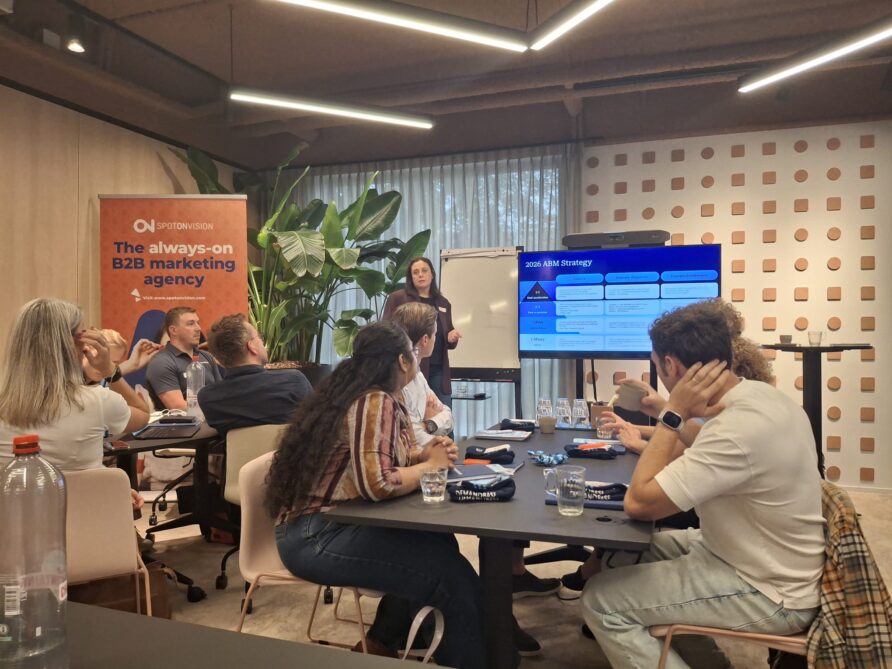
During our AI in ABM masterclass, a joint production of SPOTONVISION and Demandbase, this became one of the recurring themes. AI can help us become more precise and work at a scale that was previously impossible, but the fundamentals of good B2B marketing become more important, not less.
You still need to understand which accounts matter, who is involved in the buying process, what those people care about and when it makes sense to engage. Marketing and sales still need to work together. And ultimately, you still need to earn attention and trust.
The difference is that AI can help us make much better decisions along the way.
So what does AI in account-based marketing actually mean? For me, it is about using AI to improve how marketing and sales select, understand, prioritise and engage target accounts and their buying groups. The real opportunity is not simply generating more content or automating more tasks. It is knowing where to focus and what to do next.
How AI is changing the B2B buyer journey
B2B buyers have been doing more independent research for years, but AI is accelerating that shift. Buyers can now use LLMs to explore a problem, investigate possible solutions, compare approaches and help build a shortlist before they speak to a supplier. That makes the early stages of the buyer journey increasingly important.
B2B Research shows that buyers spend only a relatively small part of their buying journey directly with suppliers, while much of the decision-making process is already happening before conversations with sales begin.
For marketers, that means waiting for an obvious buying signal can be too late.
We need to think more deliberately about what happens before an account is actively in-market. Are we already visible? Does the buying group recognise us? Do they associate our brand with the problem we help solve? Have we built any credibility before the formal buying process starts?

This is what I mean by shifting left.
Shifting left is not simply about creating more brand awareness. It means building familiarity and relevance with the accounts you want to work with before there is an active opportunity. That might involve shaping the conversation around an emerging business problem, creating useful thought leadership or making sure several people within a target account already know who you are before an RFP appears.
In that sense, brand and account-based marketing are moving much closer together. For strategic accounts, brand building can itself become account-based.
Using AI to choose the right target accounts
Of course, becoming more visible to the market only works if you know where to focus.
Account selection has always been one of the most important parts of an ABM programme, but it is not always as rigorous as it could be. Marketing may have one list, sales another, while historical relationships, strategic ambitions and internal preferences all influence which companies receive attention.
AI gives us an opportunity to make target account selection much more evidence-based.
During the masterclass, Demandbase demonstrated a process in which historical performance, reasons for lost business, industry opportunity, buying readiness, pipeline history and exclusions are brought together to create a prioritised target account list.
The interesting part is not that AI should decide which accounts marketing and sales pursue. It shouldn’t. The value is that AI allows us to examine much more information before we make that decision.
It leads to a more useful question than simply asking whether an account matches the ICP: Why this account, and why now?
An account may fit your ICP perfectly but show little indication that you can create momentum there. Another may not look quite as obvious on paper but show increasing intent, engagement from relevant people or an existing relationship that creates an opportunity.
AI can help teams move from a target account list that is reviewed periodically towards much more dynamic account prioritisation.
Why buying groups matter more than ever
Choosing an account is only the beginning, because an account does not make a buying decision. People do. B2B purchases involve buying groups that can span different functions, countries and business units. During the masterclass, this led to an interesting discussion about “accounts within accounts”, particularly in large international organisations where several buying centres may exist alongside one another.
This is where many ABM programmes can still improve. We may know which company we want to reach and be able to target advertising towards it, but that does not automatically mean we understand the people who will influence the decision.
AI can help identify missing roles, analyse engagement patterns and show where an account team may be over-reliant on one relationship. More importantly, it can help us understand that different people need different things from us.
An end user may want practical information that helps them do their job. A technical buyer may care about integrations, specifications and security. A senior decision maker is likely to be interested in strategic or commercial outcomes, while procurement will have different questions around compliance, risk and price.
For me, this is one of the most interesting applications of AI in ABM. Not using AI simply to create more personalised content, but using it to understand what is relevant to whom, and at what point in the buying journey.
More content is easy. More relevance is difficult.
Turning intent and engagement into action
Once you start looking at ABM through the buying group rather than the individual lead, intent and engagement data become much more useful. The question is no longer simply whether somebody downloaded something or visited a page. We can start looking at what is happening across the account.
Are more people becoming engaged? Are they the right people? Are there new research signals? Is the account moving from awareness towards active consideration? And based on those signals, should marketing continue building familiarity, or is this the moment for sales to become more involved?
That also means different channels can play different roles. Display advertising may help build awareness, search can capture active research, LinkedIn can support retargeting and buying-group engagement, while more personalised content and outreach can support accounts that are further along in their journey.
The aim is not to create more touchpoints for the sake of it. It is to make the next touchpoint more relevant.
How do you measure AI-driven ABM?
And then comes the difficult question: is it actually working? ABM cannot be judged on lead volume alone.
A useful ABM measurement model follows whether the right accounts and people are engaging, whether those accounts are progressing through the journey and whether that activity ultimately contributes to pipeline and revenue.
That means looking at commercial measures such as pipeline, conversion, average deal size, win rate and sales cycle length alongside earlier indicators such as account engagement, buying-group coverage and journey progression.
But measurement should not just prove that ABM deserves its budget. It should help us see where the programme needs attention.
If engagement is high but very little pipeline follows, there may be a sales follow-up issue. If an account shows lots of activity but we know very few of the people involved, buying-group coverage may be the problem. And if accounts remain stuck at the beginning of the journey, perhaps the proposition or content is simply not relevant enough.
That makes measurement part of how you run ABM, rather than something you add at the end to report the results.
AI scales ABM. Humans make it meaningful
For me, this is where the conversation ultimately lands. AI is extremely good at tasks that benefit from scale and pattern recognition. It can analyse large amounts of data, spot signals, help us prioritise accounts and support the creation and adaptation of content.
Humans still bring strategy, creativity, relationships and trust. The biggest risk therefore isn’t that AI makes account-based marketing less human. It is that we use AI to produce more mediocre marketing, faster.
More emails, more ads, more content and more automated outreach are not automatically better marketing. The bigger opportunity is to use AI to become more selective.
Which accounts deserve attention? Which people matter within those accounts? What is changing? What do those signals tell us? Where should marketing act, and where does sales need to step in?
If AI helps us answer those questions better, account-based marketing becomes not only more scalable, but also more relevant. And perhaps that is the bigger shift taking place.
The future of ABM is not really about running more campaigns. It is about orchestrating the customer lifecycle, from building familiarity before buyers actively enter the market to engaging buying groups, supporting sales and continuing to create value after a customer is won. Which brings me back to one of the simplest takeaways:
Think big. Start small. Be always-on
Start with a manageable group of accounts. Learn where AI genuinely improves the quality of your decisions. Keep human judgement firmly in the process. Measure what changes, and then scale what works.
AI can make ABM bigger. The real opportunity is to make it better.
At SPOTONVISION, we believe the fundamentals remain the same: understand your buyers, choose the right accounts and create relevance throughout the buying process.
Would you like to discuss this topic with us? Get in touch.
Share this article
Related insights


Grow your B2B Marketing knowledge
Subscribe to keep up with our latest B2B Marketing updates and exclusive events. Straight to your inbox, once a month.