Account-based marketing in practice: lessons from Vodafone Business


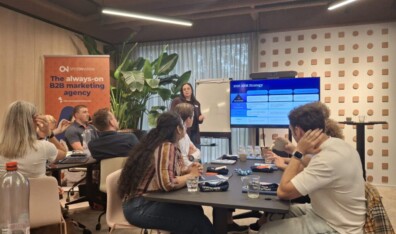
As part of our SPOTONVISION Lunch & Learn series, we invited Susan Konings and Eva Croonen from Vodafone Business to share how they have developed their account-based marketing approach within a large B2B organisation.
They spoke openly about what it takes to build an account-based growth programme in practice: creating sales buy-in, selecting the right accounts, building a structure that lasts and staying close to customers.
The questions behind their story are familiar to many B2B marketers. How do you create real alignment with sales? How do you decide which accounts deserve priority? How do you move from individual campaigns to long-term account growth? And how do you demonstrate business value?
“Because account-based marketing is often easier to explain than to implement.”
Focusing on a defined group of accounts is only the starting point. A successful approach also requires shared priorities, commitment and a clear way of working across sales and marketing.
Account-based marketing is not a marketing programme. It is a shared growth approach between sales and marketing.
Why Vodafone Business invested in account-based marketing
Vodafone Business started developing its account-based approach with a clear ambition: to change market perception.
The organisation wanted to move beyond being seen mainly as a connectivity provider and strengthen its position as a broader technology partner for business customers. Valueadded services such as IoT and security solutions play an important role in that ambition.
Its account-based growth programme was built around three pillars:
- Strengthening relationships by expanding stakeholder networks within accounts and building deeper connections.
- Building reputation by making the broader value of Vodafone Business more visible.
- Growing revenue by creating opportunities for cross-sell and upsell.
An important point Susan and Eva made was that revenue is often the result of the first two pillars. Stronger relationships and a stronger reputation create the conditions for commercial growth.
Sales alignment is the foundation
“One of the clearest lessons was the importance of sales involvement.”
When Vodafone Business started with account-based marketing, not everyone was immediately convinced. That will sound familiar to many organisations. Account managers have limited time and clear commercial responsibilities. A new way of working needs to prove its value.
The team therefore started small, demonstrated results and built support step by step. Regular collaboration helped sales and marketing develop a shared view of accounts, opportunities and customer needs. Marketing became more closely connected to the commercial account strategy, rather than operating as a separate discipline.
The lesson is simple:
“Sales buy-in is not something you secure once at the start. It has to be built and maintained over time.”
How Vodafone Business selects priority accounts
Account selection is another area where the approach became more structured. Many organisations begin with sales intuition: “these are our most important accounts”. Sales knowledge is essential, but Vodafone Business combines it with data to create a more balanced view.
Accounts are considered from two perspectives:
- Account attractiveness: which accounts offer the strongest commercial potential?
- Business strength: where are there already strong relationships, stakeholder access or a solid position to build from?
This creates a better conversation between sales and marketing. Instead of relying only on individual opinions, teams can discuss where the strongest opportunities exist and where joint attention can make a difference.
Building an operating model that lasts
“Account-based marketing can easily lose momentum if it depends on a few enthusiastic people.”
Vodafone Business therefore built a clear operating rhythm around the programme. This includes ownership, regular alignment between sales and marketing, collaboration across marketing disciplines and structured moments to review accounts, opportunities and challenges.
That rhythm matters. It turns account-based working from an occasional campaign into part of the wider commercial approach.
It also requires commitment. In complex B2B environments, results do not appear overnight. Relationships need time to develop and commercial opportunities may emerge months after the first activity.
What account-based marketing looks like in practice
The practical examples made this especially clear. In one strategic account, the team wanted to move beyond its existing contacts. Customer conversations revealed new insights and created new ways to engage a broader group of stakeholders. Targeted experiences, including a golf event and a sector meet-up, helped strengthen those relationships further.
Susan and Eva also shared an example from a cluster-based programme where a personalised ebook helped open a conversation with a prospect.
These are very different tactics, but the principle is the same. Account-based marketing is not about adding a company logo to a campaign. It is about understanding an account well enough to know which conversation, content or experience can genuinely move the relationship forward.
How AI supports an account-based approach
AI can make parts of this work faster. Vodafone Business uses AI to support areas such as account research and personalisation. It can help teams collect, structure and analyse information more efficiently.
“But AI does not remove the need for customer understanding.”
The real value still comes from knowing what is happening inside an account, understanding who is involved in decisions and recognising what matters to those people. AI can support that process, but relevance still depends on the quality of the insight behind it.
Five lessons for B2B marketers
The Vodafone Business case offers five practical lessons for organisations developing account-based marketing:
- Start with business objectives, not campaigns. Be clear about the relationship, reputation and revenue outcomes you want to influence.
- Involve sales from the beginning. Shared ownership is essential if account-based marketing is going to become part of the commercial way of working.
- Combine data with human insight. CRM data can help prioritise accounts, but sales knowledge and customer conversations add context.
- Build governance and commitment early. Clear roles, regular alignment and a consistent rhythm help maintain momentum.
- Give the approach time. In complex B2B markets, relationship and reputation indicators may show progress well before revenue does.
Where to start with account-based marketing
The Vodafone Business case shows that account-based marketing is not simply a more personalised campaign strategy. It changes how sales and marketing work together around the accounts that matter most.
Every organisation has a different starting point. Some need to strengthen sales and marketing alignment. Others need a better way to select accounts, improve buyer insights or create more structure around strategic opportunities.
At SPOTONVISION, we believe the fundamentals remain the same: understand your buyers, choose the right accounts and create relevance throughout the buying process.
Technology, tactics and channels will keep changing. The need to understand the people and organisations you want to do business with will not. Understand your buyers. Choose your accounts carefully. Create value that matters.
That is where sustainable account growth starts.
Would you like to discuss this topic with us? Get in touch.

Share this article
Related insights


Grow your B2B Marketing knowledge
Subscribe to keep up with our latest B2B Marketing updates and exclusive events. Straight to your inbox, once a month.